This time, I visited Professor Emmerig at his institute in Vienna to conduct research on Chinese coins produced by the Austrian Mint. Professor Emmerig found several publications on Austrian mint artists, including the engraver Richard Placht of the Austrian Mint. I had just visited the mint but found limited access to its archives. He recalled that an archive at the mint did exist, as he had visited it years earlier during a Numismatic Society meeting. Its existence had become less known within the mint itself. Professor Emmerig kindly promised to look into this for me at the mint. He also said he would inquire about Chinese coin holdings in the cabinet at the Kunsthistorisches Museum Wien. Furthermore, he gave me a fascinating tour of the university's own numismatic collection.
Several months after my visit, Professor Emmerig delivered on his promise. He sent crucial information: the Austrian Mint's archive room held all records post-1911, while pre-1911 materials were stored at a state depository about an hour outside Vienna. Most importantly, he had found records of coins the mint made for China beginning in the 1920s. He generously offered to personally accompany me to the archive on my nextvisit to Vienna.
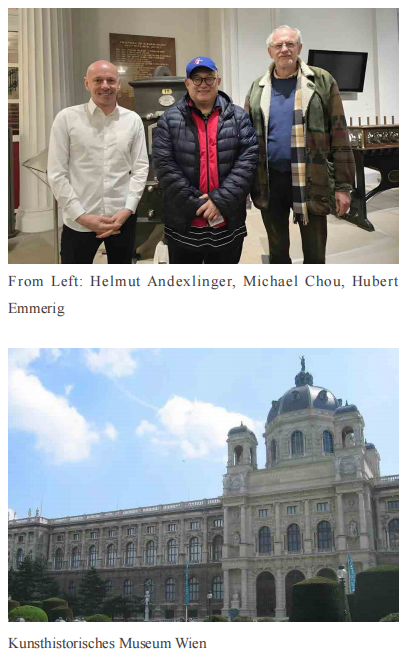
In September 2024, my friend and Chinese numismatist Charles Coker, visiting Vienna on an opera tour, also met with Professor Emmerig to discuss these findings.
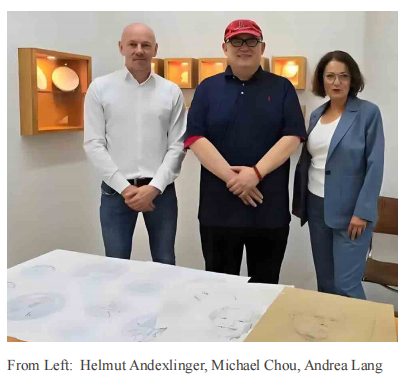
In January 2025, I finally accessed the Austrian Mint's archive with Professor Emmerig, assisted by Helmut Andexlinger, Head of the Design Department.
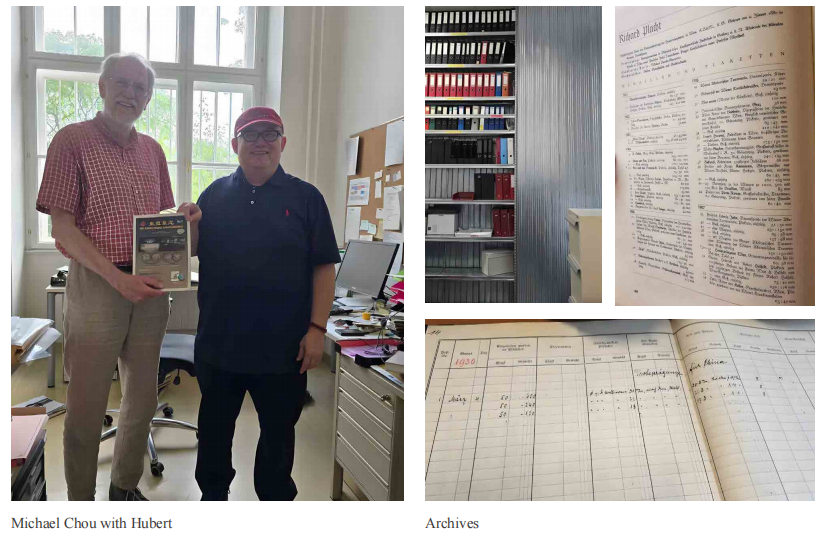
We examined the mint's production archive books and notes, which detailed Chinese coinage projects starting with the Richard Placht-designed and engraved 1927 Sun Yat-sen Mausoleum dollar. This was followed by records of the 1929 Junk patterns and the series of Chinese spade nickel coins from the 1930s bearing the Austria Mint's 'A' mint mark. During the visit, Helmut mentioned that he was in charge of the plaster models passed down from the previous department head, including many by Richard Placht. We arranged to return the next day to view them.
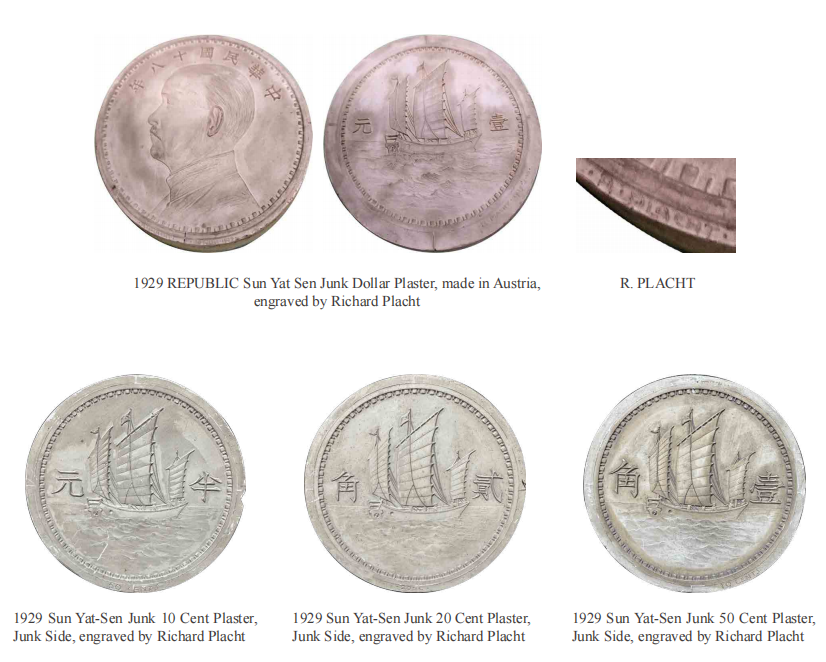
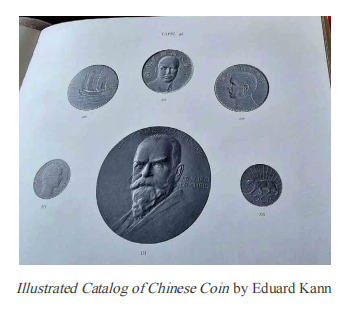
The following day's examination of the plaster models by Placht was a revelation. The artistry of the master designer and engraver was stunning, particularly the exceptional sharpness and detail of the sail on the Junk pattern model. Helmut noted that the quality of the plaster material used in that era was far superior to what is available today. We also discovered plaster models for minor 1929 Junk pattern coins (10, 20, and 50 cents), originally intended as copper coins, with the values and dates inscribed on the obverse and reverse of the models. This was a fantastic discovery that added to the understanding of theChinese coins produced at the Austria mint. It was also in line with the historical practice of striking five pattern coins for each type: one reserved for the mint, one for the die-producing company (Böhler Brothers & Co. Vienna.), one for the Historical Museum, and two given to the designer. Richard Placht later sold his personal set of pattern coins to Eduard Kann in the 1950s, which were subsequently documented in Kann's Illustrated Catalog of Chinese Coins in 1954.
Armed with this information from Professor Emmerig, we asked our friend and journal editor, Zhou Bian, to author an article on the Chinese coins produced by the Vienna Mint, Austria. This marks the beginning of our reporting, as we anticipate further research into the pre-1911 Chinese coin records at the state depository, potential holdings at the Vienna Museum, and the possible existence of original dies and other pattern coins.
This exciting numismatic journey to Austria has proven immensely fruitful, and we extend our sincere gratitude to all who assisted in this collaborative process of discovery